 how-to
What Should You Do When a Pipe Bursts?
Last Updated: October 25, 2026
Quick Summary
Shut off the main water valve immediately, cut power to wet areas, and call emergency pipe repair services in Colorado. Document the damage with photos before cleanup, then apply a temporary fix like silicone tape to contain the leak until a plumber arrives.
- Most emergency pipe repairs take one to four hours once a plumber arrives on site.
- Never stand in standing water to flip a breaker; call an electrician if the panel is wet.
- Self-fusing silicone tape or a pipe repair clamp can temporarily seal a pinhole or small crack.
- Never use an open flame or blowtorch to thaw a frozen pipe; use a hair dryer instead.
- Ask whether the after-hours dispatch fee is separate from the hourly rate and credited against the repair.
Table of Contents
- What to Do When a Pipe Bursts: First 10 Minutes
- How to Shut Off Water to a House Before It Floods
- Temporary Fix for a Leaking Pipe Until Help Arrives
- How Long Does Pipe Repair Take?
- Repair or Replace: Making the Call on Damaged Pipes
- Colorado Freeze Prevention and Thawing for Frozen Pipes
- What Drives the Cost of Emergency Pipe Repair Services
- Requesting Your Emergency Pipe Repair Estimate
- Frequently Asked Questions
What to Do When a Pipe Bursts: First 10 Minutes
A burst pipe can release gallons of water into your home within minutes, so the first ten minutes matter more than the next ten hours. This guide covers exactly what to do when a pipe bursts, from shutting off the water to requesting emergency pipe repair services in Colorado.
The single most important fact: a burst pipe is a water-control problem first and a plumbing problem second. Stop the flow, then call for help.
Turn Off the Water and Cut the Power
Shut off the main water valve immediately. On most homes it sits near the water meter or where the supply line enters the basement, crawlspace, or utility closet. Turn it clockwise until it stops.
Then cut power to any area where water is pooling near outlets, appliances, or the electrical panel. Water and live current don't mix. If you can't safely reach the breaker, leave it and evacuate.
Watch out: never stand in standing water to flip a breaker. If the panel is in a wet area, call an electrician before anyone touches it.
Document the Damage Before You Clean Up
Grab your phone and photograph everything before you move a single towel. Wide shots of each affected room, close-ups of damaged drywall, flooring, and belongings, and a photo of the burst section itself. Your insurer will ask for this, and the Insurance Information Institute's guidance on filing home claims explains why timestamped documentation strengthens a claim.
Then start mopping and move valuables clear. Documentation first, cleanup second. It's the step almost everyone skips, and it's the one that costs them at claim time.
How to Shut Off Water to a House Before It Floods
Knowing how to shut off water to a house is a skill every homeowner should practice before an emergency, not during one. The main shutoff valve controls the entire supply.
Here's the sequence:
- Locate the main valve near the meter or entry point.
- Turn clockwise firmly until fully closed.
- Open a low faucet to confirm the flow has stopped.
- If the valve won't budge, call your water utility for the curb-side shutoff.
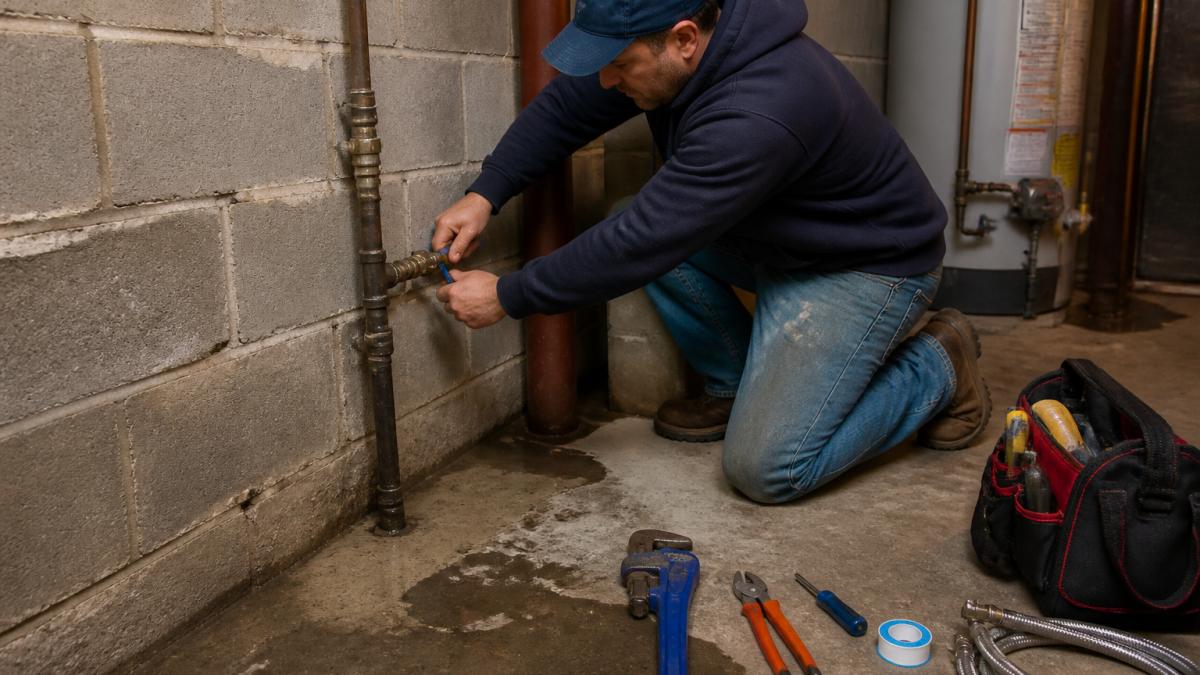
For fixture-level emergencies, the valve under the sink or behind the toilet isolates that line. A common mistake is forcing a stuck valve and snapping the handle. Apply steady pressure, not brute force.
Temporary Fix for a Leaking Pipe Until Help Arrives
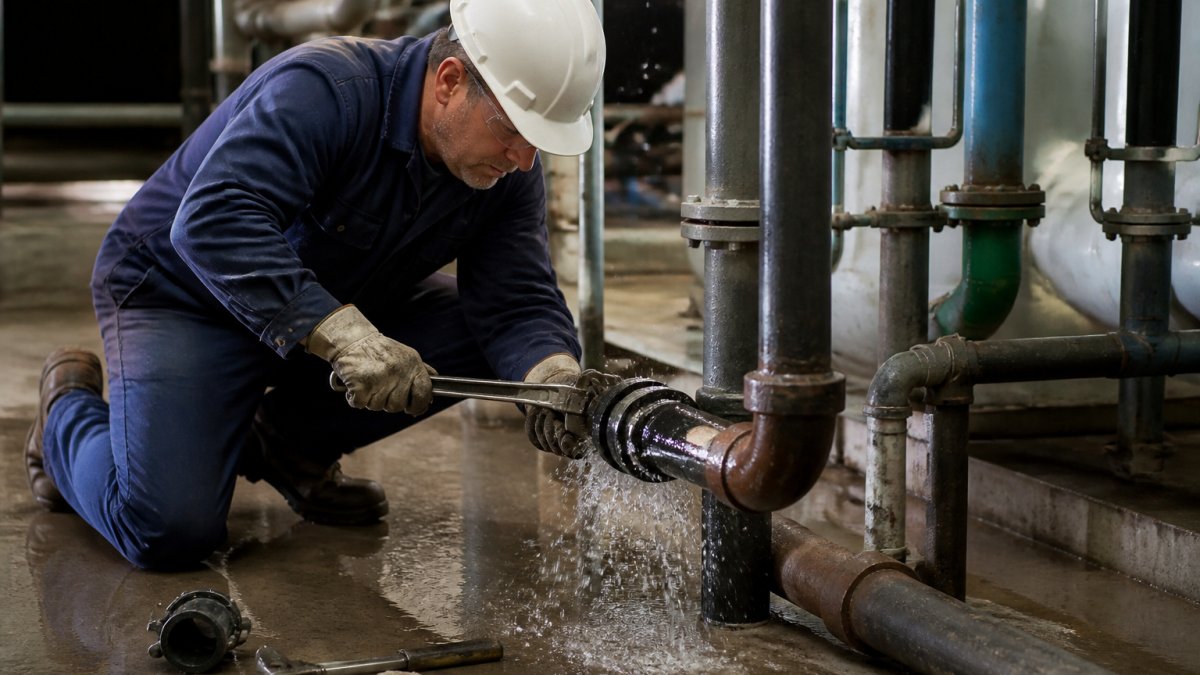
A temporary fix for a leaking pipe buys you time, not a repair. For a pinhole or small crack, wrap the section tightly with self-fusing silicone tape or a pipe repair clamp, starting an inch past the leak on each side.
These measures hold minutes to hours, not days. They let you contain the water and get a professional on-site before the damage spreads. When you're ready to hand it off, a technician can finish the job properly.
Watch out: never use tape or clamps on a fully split or pressurized pipe. If water is spraying, shut off the main and wait for help.
How Long Does Pipe Repair Take?
Most emergency pipe repairs take one to four hours once a plumber arrives, depending on access and the type of damage. A straight-section copper or PEX repair is quick; a pipe buried behind drywall or under a slab takes longer because access and drying add time.
Response time is the bigger variable. Many companies advertise 24/7 service and rapid dispatch, but actual arrival depends on your location and the time of day. Ask for a realistic arrival window when you call, not a promise.
Here is how long the job itself typically takes once help is on site.
| Item | Value | Note |
|---|---|---|
| Most emergency pipe repairs | One to four hours | Once a plumber arrives |
| Straight-section copper or PEX repair | Quick | Depends on access and damage type |
| Pipe behind drywall or under a slab | Longer | Access and drying add time |
| Response time | Bigger variable | Depends on location and time of day |
Repair or Replace: Making the Call on Damaged Pipes
Repair is the right call for an isolated failure on otherwise sound pipe. Replacement makes more sense when the damage signals a systemic problem: recurring leaks, widespread corrosion, or pipe that's past its service life.
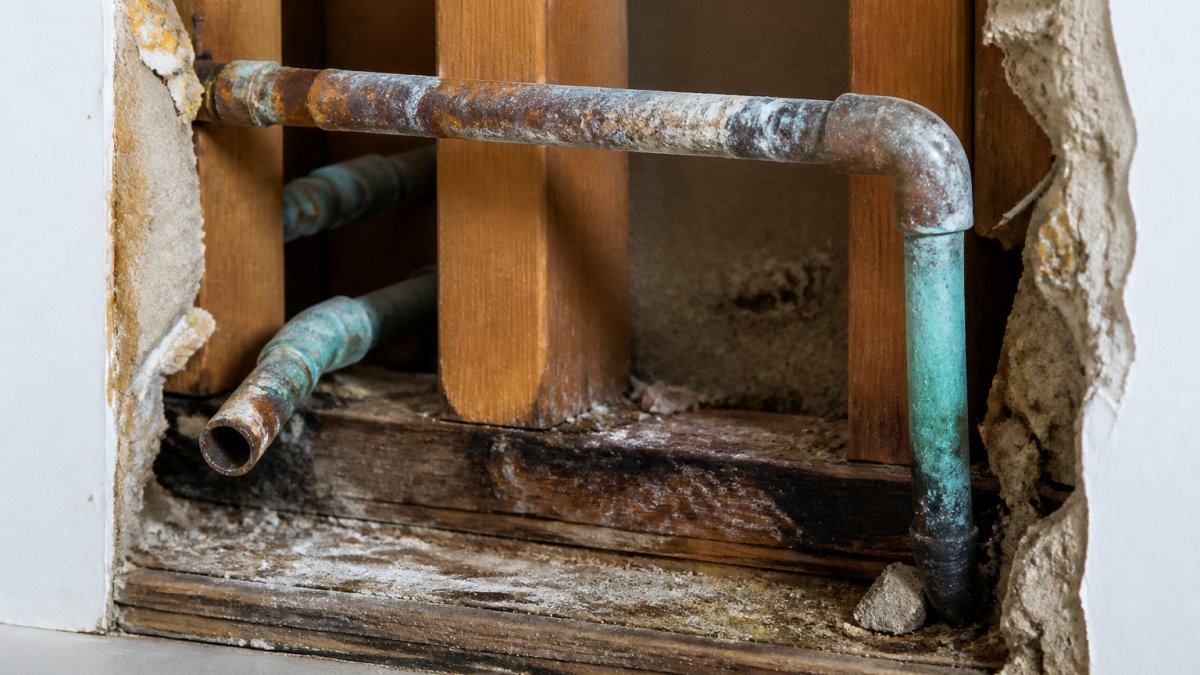
Corrosion is the deciding factor most homeowners miss. If you're seeing rust-colored water or pitting at multiple joints, a single repair just postpones the next failure.
Initiate Your Project Consultation →
When repair is the answer, our plumbing repair service covers the fix and the diagnosis behind it. The honest rule: fix the pipe, but investigate the pattern. One leak is an accident; three leaks in a year is a system telling you something.
Colorado Freeze Prevention and Thawing for Frozen Pipes
Frozen pipes are the leading cause of burst-pipe emergencies in cold climates, and the risk is not uniform across a home. Elevation, wind exposure, unheated crawlspaces, garages, and exterior walls all shift which lines freeze first. Prevention costs far less than repair, and knowing how to tell a freeze from a burst keeps a manageable problem from becoming a flood.
Know Which Pipes Freeze First
Water expands as it freezes, and the pressure splits pipe whether or not it has already cracked. The lines most likely to freeze are those on exterior walls, in unheated attics and crawlspaces, in garages, and any supply line that runs along a foundation wall. Hose bibs and exterior spigots are common first failures. If a faucet stops flowing on a cold morning but neighboring fixtures still work, suspect a frozen section on that branch rather than a whole-house failure.
Prevention That Actually Holds
- Insulate supply lines in unheated spaces, and add heat tape on vulnerable runs where code and manufacturer instructions allow.
- Disconnect garden hoses and shut off and drain exterior spigots before the first hard freeze.
- Keep cabinet doors open under sinks on exterior walls during cold snaps so room air reaches the pipes.
- Let a pencil-thin stream drip from a far faucet overnight when temperatures plunge; moving water resists freezing.
- Keep the thermostat steady, day and night, during a freeze, a lower nighttime setting can be the difference on an exterior wall.
- Seal gaps around pipes where they penetrate exterior walls, and check that crawlspace vents are closed for winter.
Triage: Frozen, Leaking, or Burst?
Before you thaw anything, decide what you are dealing with.
- No flow, no water visible, no hissing: likely a freeze. Shut off the main if you can't reach the section, and thaw slowly.
- No flow but a damp spot or drip appears as it warms: the pipe has likely split. Shut off the main immediately and call for repair before further thawing.
- Water spraying or pooling with the main open: active burst. Shut off the main, cut power to wet areas, and call for emergency service.
After the Thaw
Once flow returns, watch the section for a day. A pipe that froze and split often weeps only after pressure returns, so a dry pipe during thaw is not proof of repair. If you see rust-colored water, pitting at joints, or repeat freezes in the same run, the section is a candidate for replacement rather than another patch, the pattern, not the single event, is the signal.
What Drives the Cost of Emergency Pipe Repair Services
Access is usually the largest variable. An exposed copper line in a basement or utility room can be cut, soldered, and pressure-tested in a short visit.
Pipe material changes both labor and parts. Copper, PEX, CPVC, galvanized steel, and cast iron each need different fittings, tools, and joining methods.
Damage severity sets the scope. A pinhole leak on a straight run is a small, predictable repair.
Timing affects the rate. After-hours, weekend, and holiday calls typically carry a higher dispatch or labor rate than standard business hours.
Replacement versus repair changes the order of magnitude. A single-section repair is priced as a service call.
Most reputable companies will give a range rather than a single number until the pipe is exposed, because access and severity can't be fully known from the surface. That range should still be specific about labor, materials, and any mitigation line items.
Requesting Your Emergency Pipe Repair Estimate
When water is flowing, the fastest path to a real estimate is a direct call with clear details ready: where the leak is, whether the main is shut off, and how much water you're seeing.
New Creations Plumbing Service llc brings over two decades of experience and disciplined budget management to every emergency call, with rigorous safety protocols and evidence-based methods that protect your property and your wallet. We tailor each solution to the actual damage rather than a one-size-fits-all quote.
Ready to stop the water and start the fix? Request a comprehensive consultation and get a clear, transparent estimate for your emergency pipe repair.
A burst pipe tests your home and your patience at the same time. The homeowners who come through it best are the ones who shut off the water fast, document everything, and call a team that shows up when it says it will.
Frequently Asked Questions
What is considered a plumbing emergency that needs pipe repair?
A plumbing emergency is any issue that risks ongoing water damage or loss of essential service. That includes a burst or broken pipe, a severe leak you cannot shut off, sewage backing up into drains, or a water heater failure leaking from the tank. If water is actively flowing where it should not be, treat it as urgent and call for emergency pipe repair rather than waiting for a scheduled visit.
Should I turn off the electricity if a pipe is leaking near outlets?
Yes. If the leak is near outlets, wiring, or your electrical panel, shut off power to that area at the breaker before you touch anything wet. Water and live electricity are a dangerous combination. Once power is off, shut off the main water valve, document the damage, and call a licensed plumber. Do not stand in standing water while operating breakers if you can avoid it.
Can I temporarily patch a leaking pipe until a plumber arrives?
For a small, accessible leak, you can wrap the pipe with pipe repair tape or a clamp-and-rubber patch kit to slow the flow. Clean and dry the surface first so the patch adheres. This is a stopgap only, not a permanent fix. Keep a bucket underneath and shut off the water supply if the patch does not hold. A licensed plumber should still assess the damaged pipe.
How much will a plumber charge to fix a leaking pipe?
Pricing depends on the pipe location, material, access difficulty, and whether the call is after hours. Emergency rates are typically higher than standard service calls. New Creations Plumbing Service LLC does not publish flat rates because every repair differs; request a free estimate so you get a clear scope and price before work begins. Ask upfront whether the estimate includes diagnostics and materials.